

 Call us
Sit Where Monks Have Sat for Twenty-Three Centuries
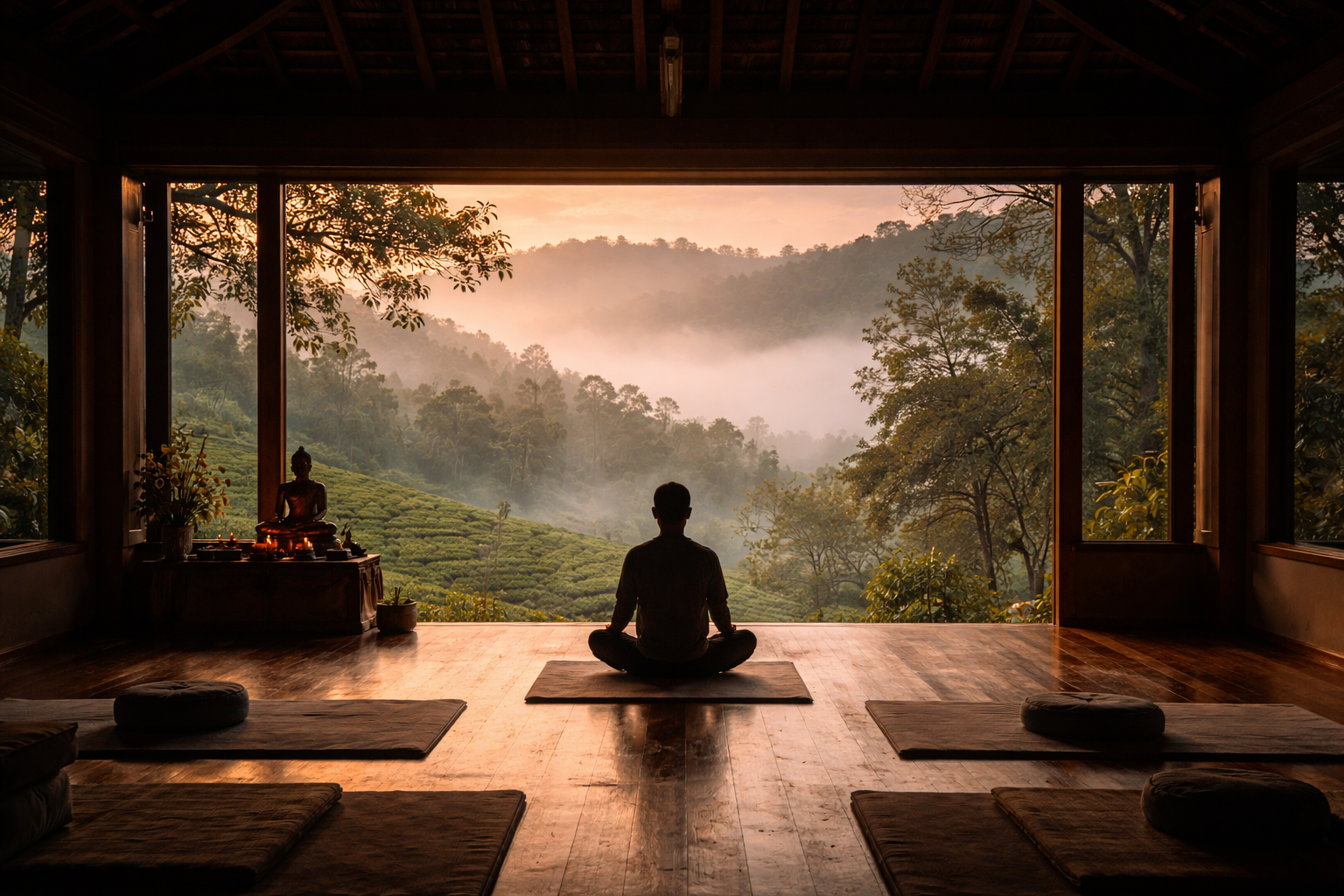
I will tell you something that might be difficult to hear: your meditation app, however many consecutive days it counts, is not the same as sitting in a place where monks have practiced for two thousand years. I say this not to diminish your practice but to describe what I have experienced—the way certain spaces hold silence differently, the way the air itself seems to have been breathed by generations of seekers before you.
Sri Lanka is one of the few places on earth where unbroken lineages of Buddhist meditation extend back to the Buddha's own lifetime. The monks meditating in forest monasteries today learned from monks who learned from monks, in chains of transmission that touch the source itself. When you sit in these spaces, you are not starting something new. You are joining something ancient and ongoing.
Nilambe: The Accessible Entry
High in the mountains above Kandy, at about one thousand metres elevation, sits Nilambe Buddhist Meditation Centre. I recommend it first because it asks the least of you while offering something genuine. There is no mandatory schedule. No required duration. You can arrive in the morning after visiting the Temple of the Tooth, sit in the meditation hall while mist rolls through tea plantations below, walk the paths through the gardens, share a simple vegetarian lunch, and return to your pilgrimage by afternoon.
Or you can stay for a week.
Getting there takes about forty-five minutes from Kandy—a tuk-tuk can make the journey, winding up mountain roads past tea pickers with their baskets. The center operates on donations, welcoming practitioners of all traditions and none. Evening meditation sessions gather in a hall that looks out over valleys filling with golden light. Morning sessions begin before dawn, when the world feels newly made.
For pilgrims with limited time, even half a day at Nilambe offers something the temples cannot: stillness. The temples show you where enlightenment happened. Nilambe offers space for it to happen in you.
Kanduboda: The Structured Path
If Nilambe is the open door, Kanduboda is the curriculum. This centre near Colombo teaches Vipassana in the Mahasi Sayadaw tradition—a precise, well-mapped approach to insight meditation. Here, you commit to a programme. You maintain noble silence. You follow the schedule: wake at four in the morning, alternate sitting and walking meditation through the day, meet daily with a teacher who has walked this path and can guide you through its stages.
The minimum stay is three days, though teachers recommend seven for genuine progress. Kanduboda lies just forty minutes from Colombo airport, making it possible to begin your pilgrimage with several days of silence—arriving in Sri Lanka and going inward before venturing outward to the temples. Or end here, integrating everything you have seen before returning home.
This path is not for everyone, but for those ready—those whose meditation practice has matured beyond apps and into genuine seeking—Kanduboda offers depth that resort retreats cannot match.
Forest Monasteries: For the Serious Seeker
I mention the forest monasteries—Rockhill Hermitage in the Kandy district and others scattered through Sri Lanka's jungles—not because most pilgrims will visit them, but because knowing they exist changes how you understand this island. These are functioning monasteries where monks live the Vinaya year-round. Accommodation is kutis: small meditation huts in the forest. Food is offered meals in the ancient tradition. You rise before dawn and sit until your legs ache and sit some more.
Acceptance requires prior meditation experience and a letter of intention. Minimum stays are typically two weeks. This is not tourism dressed as spirituality. This is the real thing, and knowing it exists—knowing that somewhere in the Sri Lankan forest, monks are sitting right now in the same posture the Buddha held—adds dimension to every temple you visit.