

 Call us
When Every Meal Becomes an Offering
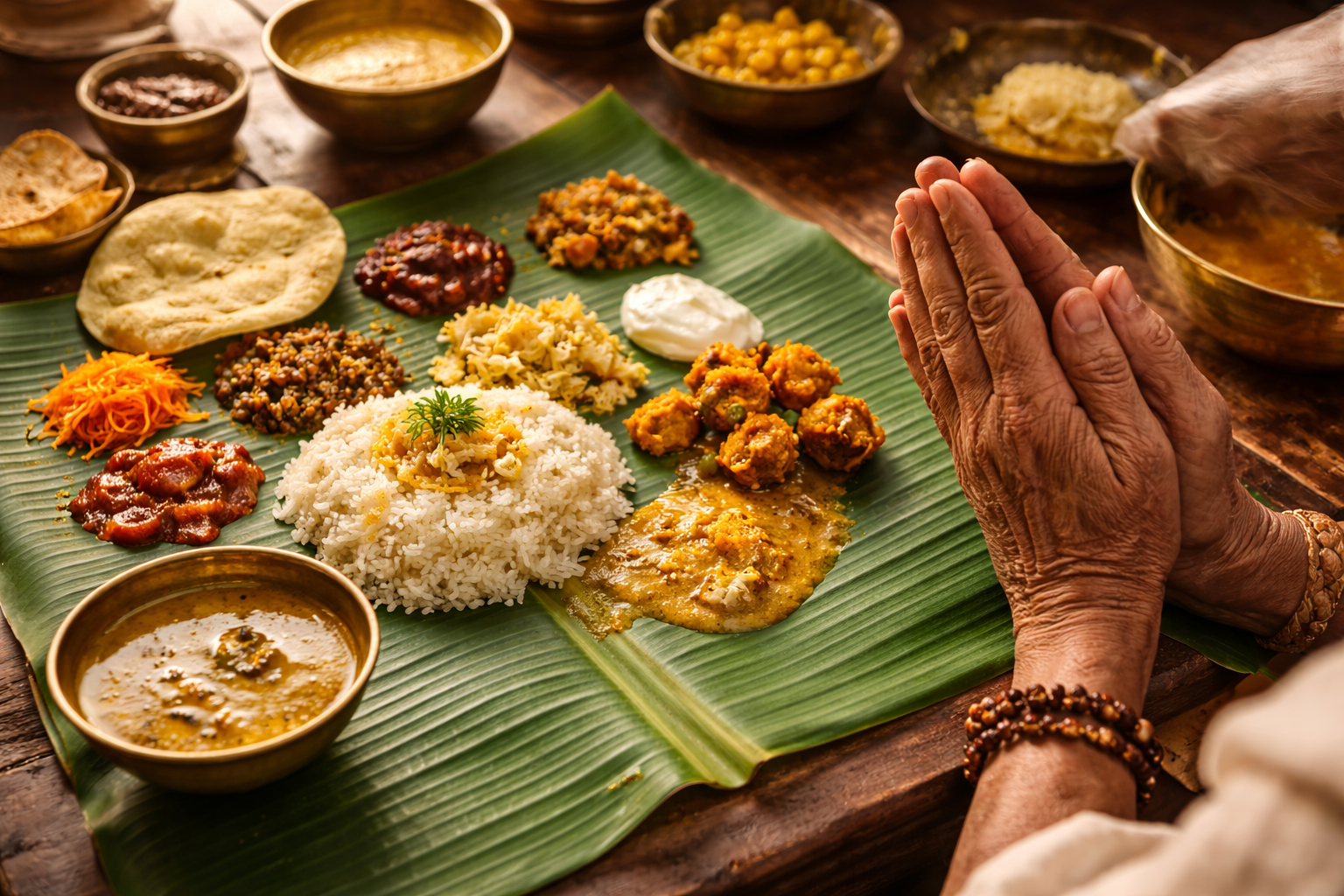
My grandmother closes her eyes before the first bite. She has not done this in restaurants for years—the gesture felt performative in places that did not understand it. But here, where the meal was prepared with mantras, where the vegetables were grown without violence to the earth, where the cook considers her work a form of worship, closing her eyes feels natural. The food is simple. The experience is sacred.
Satvic food is not merely vegetarian. It is food prepared with intention, eaten with awareness, and designed to support both body and spirit. In Ayurvedic understanding, satvic foods promote clarity, peace, and spiritual receptivity—precisely what a pilgrimage requires. Sri Lanka, with its intertwined Buddhist and Hindu traditions, offers remarkable opportunities to eat as an extension of practice rather than interruption of it.
Temple Prasadam: Food Blessed and Shared
At Kataragama Maha Devale—the sacred site where Hindu and Buddhist traditions meet in the island's southeast—prasadam is offered daily after the evening puja. This is food that has been offered to the deity and blessed before distribution: rice and curry served on banana leaves by temple volunteers to pilgrims sitting on the ground, shoulder to shoulder with strangers who are also seekers. This is not a restaurant. It is communion. Kataragama lies five hours from Colombo, two hours from Ella, and serves as a culminating site for multiple pilgrimage trails.
Nallur Kandaswamy Kovil in Jaffna—Sri Lanka's most significant Hindu temple—distributes prasadam during the annual festival from July to August and on regular puja days throughout the year. The temple kitchen operates as devotion itself, preparing food for Lord Murugan's devotees as an offering to the god. Jaffna is reached by train from Colombo (six hours) or domestic flight (one hour), and the temple sits at the heart of Tamil Hindu culture on this island.
Kelaniya Raja Maha Viharaya—one of Buddhism's most sacred sites, where the Buddha himself is believed to have visited—operates a dana sala where pilgrims receive simple vegetarian meals. The temple lies just thirty minutes from central Colombo, making it accessible as a half-day visit or a stop en route to other destinations. Come with empty stomach and open hands; leave with something nourished beyond the physical.
Restaurants Where Cooking Is Practice
Govinda's Restaurant in Colombo—on Bauddhaloka Mawatha near the Gangaramaya Temple—serves pure vegetarian meals prepared according to satvic principles. Run by devotees, the restaurant provides an oasis of intentional eating in the busy capital. Visit before or after exploring Gangaramaya or the Seema Malaka meditation centre on Beira Lake. A second location operates in Kandy near the Temple of the Tooth, offering the same careful preparation between your temple visits.
Near Mihintale—where Buddhism first took root in Sri Lanka—small vegetarian restaurants cater specifically to pilgrims. These are not sophisticated establishments; expect rice and curry on simple tables, served by families who understand that their customers have come for spiritual purposes. The food arrives as fuel for climbing the 1,840 steps to the sacred summit. The experience arrives as a reminder that even eating can be practiced.
The Ayurvedic resorts—Barberyn, Siddhalepa, Santani—serve meals designed according to each guest's constitution, adjusted through physician consultation. Every dish supports healing. Every meal is medicine for body and spirit both. While these are residential experiences rather than restaurant visits, they represent satvic cuisine at its most refined—and they may change how you think about food for the rest of your life.