

 Call us
Where the Largest Creatures Ever to Exist Breathe Beside You
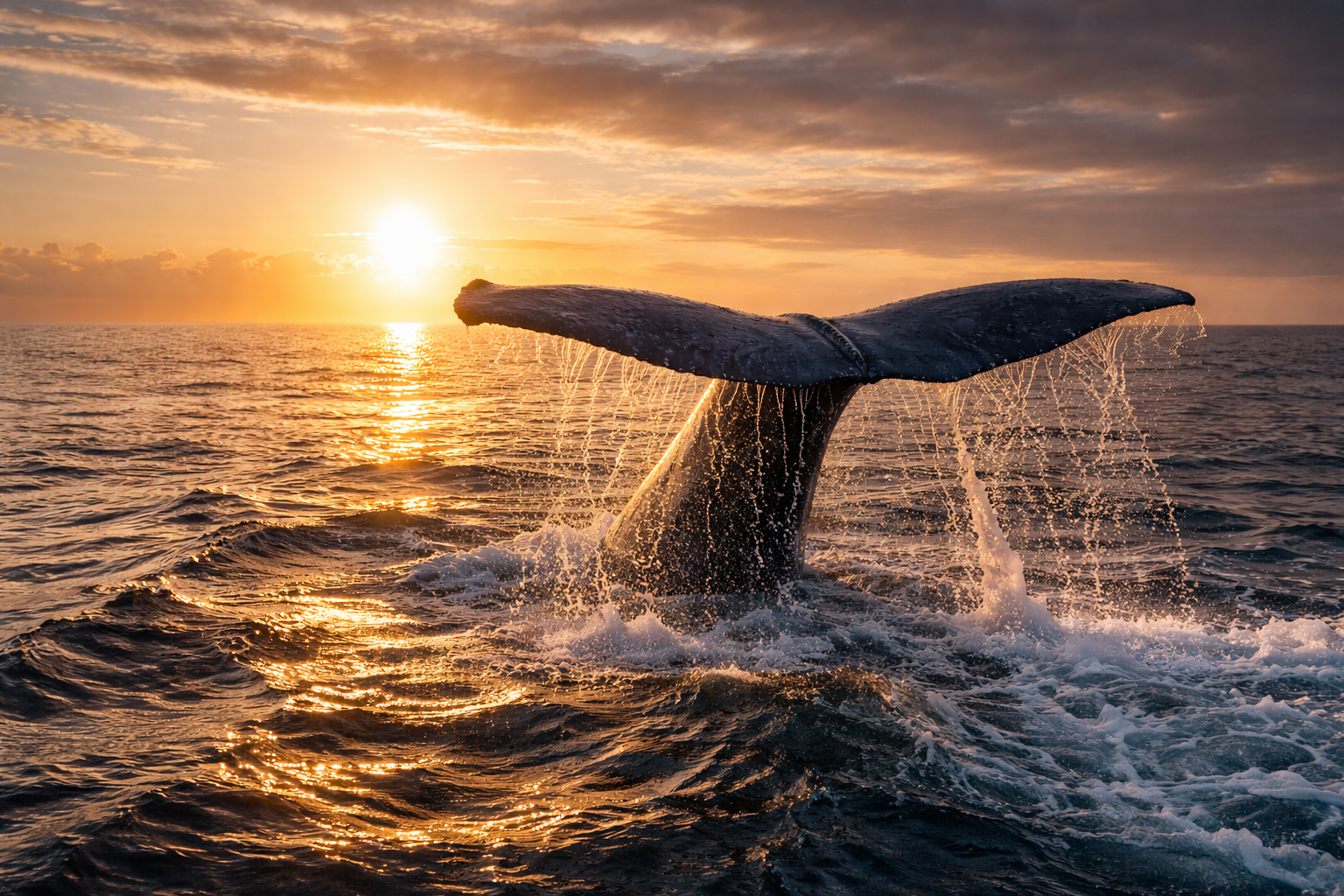
I must tell you about the moment, because without it you cannot understand what I am describing.
A blue whale surfaced beside our boat—twenty-five metres of living creature, the largest animal that has ever existed on Earth, larger than any dinosaur. Its blow rose six metres into the air. Its back rolled like a planet. My father, who had seen much in his seventy years, stood completely still. Tears were running down his face. He did not wipe them.
Some encounters exceed the scale of words.
Mirissa: The Southern Departure Point
From November to April, blue whales pass along Sri Lanka's southern coast, following the continental shelf that ancient mariners also used to navigate. Mirissa has become the primary departure point—a beach town forty-five minutes beyond Galle, where boats launch into deep water each morning in search of the giants.
During peak season, sighting rates approach ninety percent. You may also encounter sperm whales diving into the depths, fin whales cruising past, dolphins racing your bow, and occasionally the black-and-white flash of orcas. The continental shelf drops steeply just offshore, creating conditions that funnel nutrients and draw the whales close.
Trincomalee: The Eastern Alternative
From March to August, when monsoons make the southern seas rough, the east coast offers calmer waters. Trincomalee—a historic port town with significant Buddhist and Hindu temples of its own—serves as the departure point. Blue whales, sperm whales, and spinner dolphins are common. This season aligns with the Guru Nanak Trail and provides an alternative for pilgrims visiting the northeast.
What to Expect at Sea
Boats depart early—around six in the morning, when seas are typically calmest. The journey to deep water takes about an hour. Once among the whales, you may spend two or three hours watching, photographing, gasping at surfaces and blows before the boat returns. Total time is three to four hours, with a return to shore mid-morning.
How the Morning Unfolds
Plan for an early start—wake at half past four, reach the park entrance by opening time at half past five. This sounds demanding, but children find the pre-dawn adventure exciting, and the cool morning hours are most comfortable for everyone. Three hours in the park, watching elephants in golden light, photographing memories that will outlast any souvenir. Back at your accommodation by mid-morning for breakfast and rest before continuing your pilgrimage.
A practical note: motion sickness is real. Take medication the night before if you are prone; the open ocean can challenge even experienced travelers. Bring sun protection, layers for the early morning chill, and cameras with good zoom. Blue whales surface to breathe but dive quickly—each moment is precious.
Children are welcome on most boats, but consider both the early start and the possibility of rough seas when deciding if this experience suits your family. For older children and adults, the encounter can be life-changing—one of those experiences that recalibrates your sense of scale, your understanding of creation, your belief in what the world still holds.